The Proving Ground
From squad leader to survivor
I joined the 101st Airborne Division at Fort Campbell as a Weapons Squad Leader. After years in the close-knit Special Forces world, I took on a different challenge: leading nine soldiers who had never deployed and depended entirely on experience they didn’t yet have.
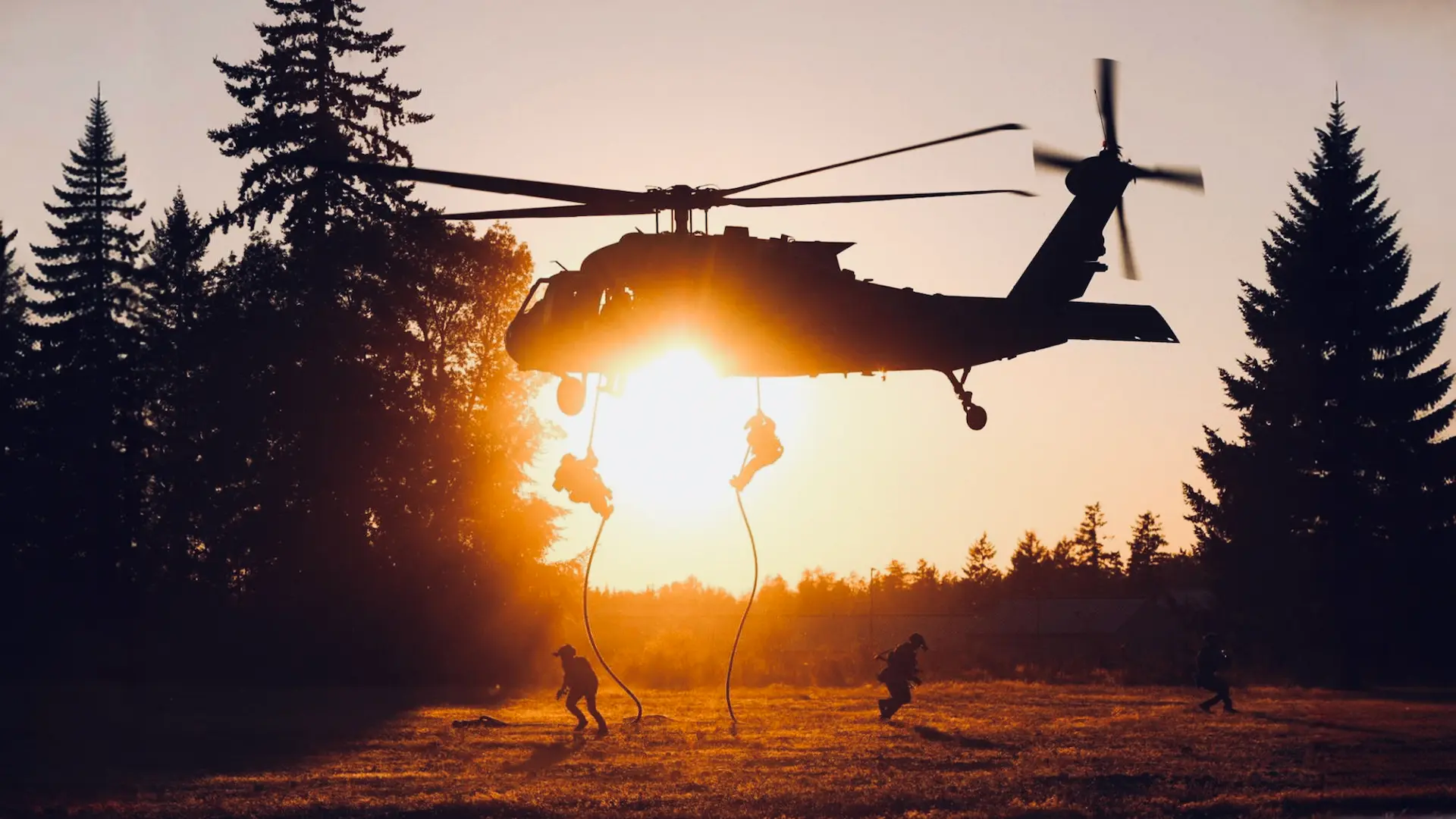
On June 18, 1996, seventeen days after my promotion to Staff Sergeant, my squad was assigned to Chalk 2 for a live-fire air assault. At treetop level, the main rotor blades of our Black Hawk collided with Chalk 1. Both aircraft went down. Six soldiers died that day, including five from our company and our First Sergeant. I survived, and our unit had to keep going.
Despite injuries that required sustained physical therapy, I returned to full duty, scored a perfect 300 on the Army Physical Fitness Test, earned 10 college semester hours with a 4.0 GPA, and was commended by the Army Chief of Staff for actions taken to treat and evacuate casualties.
Building execution systems at scale
My career moved quickly after the crash. I earned the Expert Infantryman Badge on my first try and the Air Assault Badge as Distinguished Honor Graduate. Less than a year after arriving at Campbell as a weapons squad leader, I was working at the battalion operations level.
I became Senior Operations Manager for a nearly 700-soldier air assault infantry battalion—an unusual role for a Staff Sergeant. I managed the operational training program, advised the battalion commander, ran the Pre-Ranger Course, and served as Senior Battle NCO for more than a dozen air assaults. I built a networked database that tracked real-time training statistics across five companies. I designed a command-training program that achieved 100% qualification rates and saved thousands of work-hours each year.