Strategy
Judgment Is Not a System
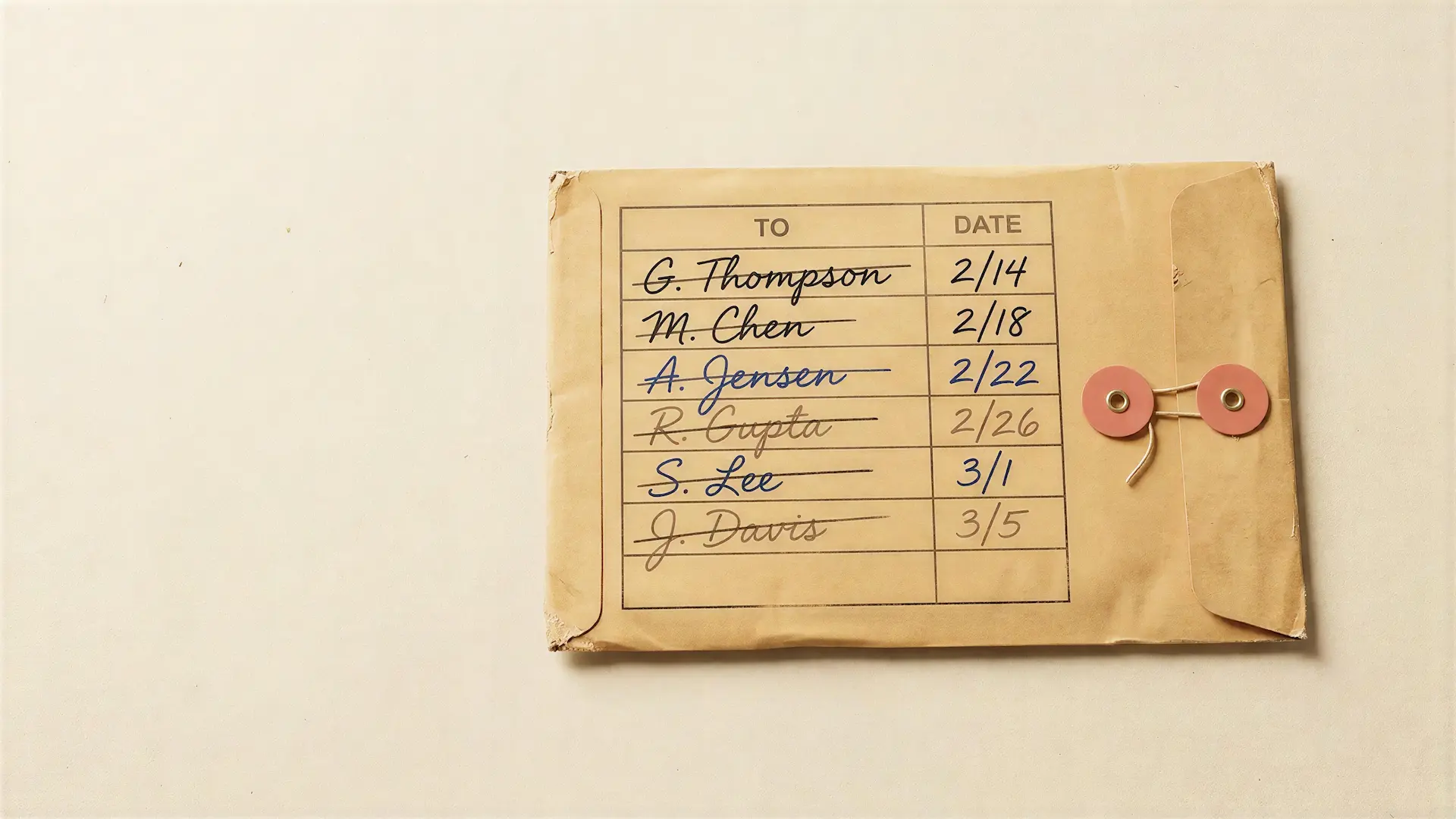
The question was small: should the new service share the platform’s database or get its own? It surfaced in a design review on a Tuesday. Six weeks later it had passed through four meetings, two escalations, and a summary slide. It was finally settled by a VP who heard it described for eight minutes among other agenda items. The question didn’t climb because anyone chose that route. It wandered because nothing in the organization said where it should stop.
The decision was reasonable. The six weeks were costly. The eight minutes were the real problem, because the person with the most authority had the least context, and everyone in the chain knew it.
Nobody in that story is bad at their job. That’s what makes it worth studying.
The Casting Diagnosis
When an organization’s decisions disappoint, the diagnosis is almost always casting. Hire a stronger architect. Promote someone more decisive. Send directors to a workshop on judgment. Underneath every version lies the same assumption: decision quality is a property of the decider, just as reach is a property of height.
So companies interview for judgment, pay for judgment, and promote for judgment. Then they route every consequential question through improvised machinery where judgment can’t operate: no named owner, no record of when the question was last settled, and one all-purpose process for every level of stakes. The same meeting settles a call that could be reversed by Friday and a call the company will live inside for a decade.
The diagnosis is wrong by one layer. Decision quality is mostly a property of the machinery: who owns the call, whether the process matches the stakes, and whether the reasoning outlives the room where it was made. Get those right and ordinary judgment compounds. Get them wrong and brilliant judgment burns off as meetings, relitigation, and escalation before any of it reaches the decision.
How the call gets made beats who’s smart, for the same reason process beats heroics everywhere else. The machinery runs every day. Brilliance doesn’t.
The Machinery
Three components carry most of the weight. None of them requires hiring anyone smarter.
One name per call. Every decision that matters has exactly one owner, named before the question gets hot, with the authority to settle it. Not the room. A room can advise; a room cannot be accountable. An imperfectly placed owner still beats a perfectly credentialed committee, because a name can be asked, a name can decide by Thursday, and a name can be wrong in a way the organization learns from. Two caveats. The name holds only if the incentives back it: reward consensus over calls, or punish the defensible miss, and your owners quietly become conveners. And where the name should sit is its own discipline, one I’ve written about separately; the short answer is near the knowledge rather than atop the chart. “The team decided” is how decisions happen without anyone deciding.
Price the process to the blast radius. Deliberation is the scarcest resource an organization has, and failure is rarely due to underinvestment. It’s misallocation. Decisions are not one species. Most are cheap to reverse: the flag flips back, the config reverts, the experiment ends. Some are one-way: the schema migration, the vendor contract, the public API, anything that ships where you can’t recall it. Machinery that treats both the same fails both. The heavyweight path slows reversible calls the owner should make the same day. Worse, heaviness teaches habits: deferring, socializing, waiting for the next meeting. Those habits are exactly wrong for the handful of calls that deserve the full apparatus of review, written record, and senior eyes. Reversible decisions deserve speed and forgiveness. Irreversible ones deserve ceremony.
Keep the why, or decide it twice. A verdict without its reasoning has a shelf life. Context shifts, and the organization can no longer tell whether the decision still holds. So it reopens the question and pays for it again. The record that prevents this is small: the question, the options, the constraint that settled it, dated and findable. Reasoning on the record is how judgment compounds instead of resetting every time its makers change teams. Organizations that skip it don’t make fewer decisions. They make the same ones every year.
Run the opening question back through that machinery. The database call has an owner by Wednesday: the tech lead nearest the constraints. The question is no easier, and the owner still asks the room. What changed is that everyone knows whose call it is. The shared-schema half is one-way, so it earns the ceremony of a written case and senior review. Everything else is reversible and settled the same day. The reasoning lands where the next team can find it. The VP never hears the question. That is the point.
Why Nobody Builds It
Casting is legible. A senior hire is an announcement, a promotion is a slide, a workshop has a receipt. Machinery is invisible in exactly the way that matters: when it works, decisions simply happen at the right speed, at the right level, once. Nobody gets credit for the escalation that never occurred or the question that stayed settled. So the budget flows to the visible fix, the org keeps buying judgment, and judgment keeps arriving into a system that can’t use it.
The expensive irony is that the machinery is cheaper than the casting. An ownership convention, a two-tier process, and a decision log cost a planning cycle to install. A director-level hire costs more each quarter and, inside broken machinery, delivers less.
The Question That Matters
So the question worth carrying back isn’t “do we have good judgment?” You do. You hired for it.
It’s this: for the last consequential call your org made, can you name its single owner, say whether the process matched what being wrong would have cost, and find the reasoning today?
If the answers are a meeting, no, and no, your smartest people aren’t deciding. They’re wandering through machinery nobody built.
Judgment was never your shortage. Throughput for it was.